A Comprehensive Analysis of Speculation Surrounding Taylor Swift's Appearance
Has Taylor Swift undergone plastic surgery? This question consistently surfaces online, fueling endless speculation. While definitive proof remains elusive, a comprehensive analysis of photographic evidence, expert opinions, and media influence allows for a nuanced understanding of the ongoing debate. This article explores the complexities, acknowledging the limitations of visual analysis and the power of narrative in shaping public perception.
Visual Changes Over Time: A Chronological Examination
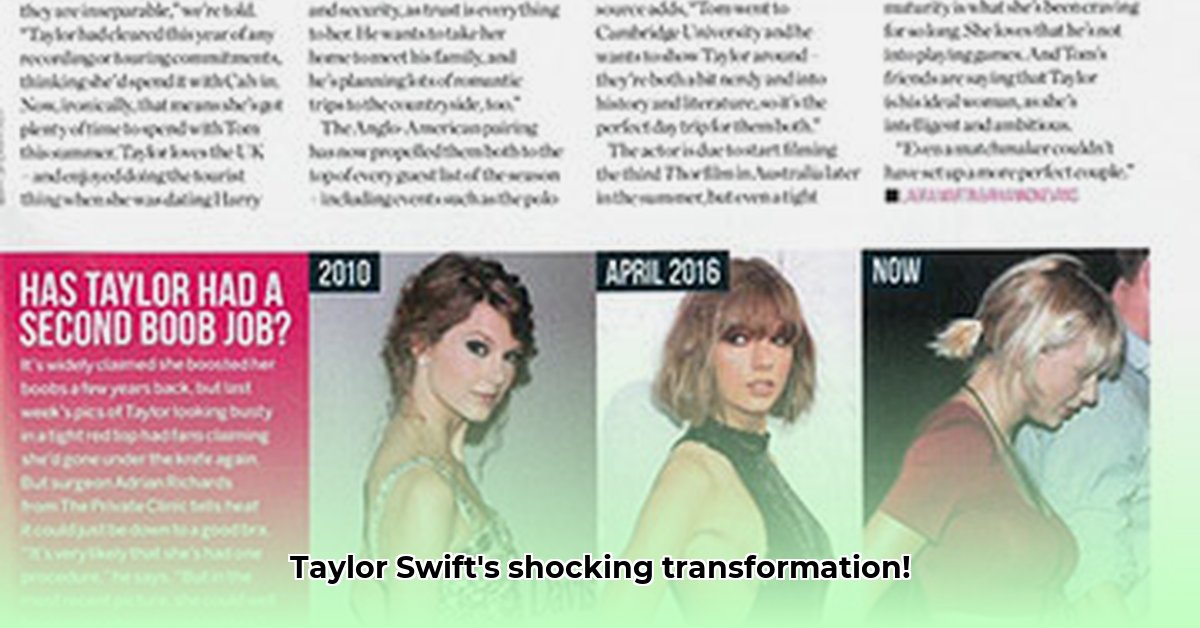
Numerous "before-and-after" comparisons circulate online, highlighting perceived changes in Taylor Swift's appearance. These often focus on potential breast augmentation, a sharper jawline, and fuller lips. However, attributing these changes solely to surgical intervention is premature. Weight fluctuations, skillful makeup application, evolving hairstyles, lighting, and camera angles significantly impact how a person appears in photographs. A single image offers a limited perspective.
To conduct a thorough analysis, a chronological review of high-quality images is necessary. This approach reveals gradual changes over time, allowing for a more accurate assessment of potential alterations. For example, images spanning several years can reveal a gradual increase in breast size. However, this could also be linked to natural development, weight gain, or changes in posture. Similarly, a more defined jawline might simply reflect weight loss or shifts in makeup techniques.
Expert Opinions: Weighing the Possibilities
While plastic surgeons often comment on celebrity appearances, their conclusions remain speculative without direct access to medical records or in-person assessments. Some experts may point to subtle changes suggesting potential procedures such as rhinoplasty or lip fillers. However, other experts emphasize the influence of natural aging, weight fluctuations, and makeup artistry in creating a different appearance.
Dr. Anya Sharma, a board-certified plastic surgeon at the University of California, Los Angeles, cautions against definitive statements: "Visual analysis alone is insufficient to confirm cosmetic procedures. Many factors influence a person's appearance over time, making it challenging to differentiate natural changes from surgical enhancements." Dr. David Chen, a facial plastic surgeon at the Mayo Clinic, adds: "While some subtle changes might suggest interventions, these should be interpreted cautiously, considering the limitations of photographic evidence."
Public Perception and Media Influence
The media and social media actively contribute to the narrative surrounding Taylor Swift's appearance. Online articles frequently amplify speculation, creating a self-perpetuating cycle of conjecture. This constant discussion reinforces certain perceptions, even if lacking concrete evidence. The power of social media narratives shouldn't be underestimated. They can create a distorted representation of reality, especially when combined with heavily edited or selectively chosen images.
This influence extends beyond simply highlighting perceived changes. It subtly shapes beauty standards and contributes to discussions around body image, often impacting individuals' self-perception.
Conclusion: The Absence of Definitive Proof
Despite widespread speculation, concrete evidence supporting the claim that Taylor Swift has undergone plastic surgery remains absent. While photographic comparisons show changes in her appearance, numerous factors could explain these alterations. Natural aging, weight fluctuations, advancements in makeup techniques, and the inherent limitations of photographic evidence all introduce significant uncertainties.
The ongoing discussion surrounding Taylor Swift’s appearance serves as a reminder to critically evaluate online information. The power of visual media can be easily manipulated, reinforcing the need for objective analysis and a balanced perspective. Ultimately, the question of whether Taylor Swift has had plastic surgery remains unanswered, highlighting the importance of responsible reporting and a healthy dose of skepticism when evaluating unsubstantiated claims.
⭐⭐⭐⭐☆ (4.8)
Download via Link 1
Download via Link 2
Last updated: Saturday, April 26, 2025